Skip to content
UK Metric Association
Campaigning for a single, rational measurement system
Menu
Home
Style guide
Alphabetical index
What is metric?
Definitions
Metric prefixes
Defining constants
Base units
Derived units
Non-SI units
SI diagrams
Writing metric
Speaking metric
Sources and references
British scientists
First international prototypes
Australian experience
South African experience
UK Progress
UK metric timeline
Building industry
Why metric?
Metric is easy to use
Metric is a proper system
Metric is powerful
Metric is a world standard
People who endorse metrication
Myths
Myths about imperial
Myths about metric
Using metric
Myths about British metrication
Myths about metric internationally
The Moon landings
Consumer protection
Practical help
Shopping
Buying food
Fair measurement for shoppers
Fair measurement for retailers
Getting a fair deal
Don’t be muddled by unfriendly practices
Unit prices
Buying home appliances
Understanding electrical appliances
Unfriendly practices when buying appliances
Television and computer screen sizes
How to complain
Cooking
How much to buy
Turkey roasting guide
Body and health
Body weight
Body mass index
People’s height and weight
Baby weight and length
Advice for health professionals
Motoring
Home DIY
Metric measuring tapes
Dual measuring tapes
Kitchen planning
Temperature
Metric supplies
The case for change
The mess we are in
Problems arising from two systems
Fuel consumption
Road signage mess
Distance information
Restriction signs
Road contractors
Walking and cycling
International travellers
Which system is better?
Principles of changeover
Resistance to change
What about free speech?
Cost of changing
Role of government
Policy areas
Retailing
Advertising
Road signs
Education
Weather reports
Land and property
Road signage
Is changing expensive?
Metric signs on UK roads
International experience
When is metric signage legal
Speed limits
Gallery
What you can do
Briefing note
Write to your MP
Speak out
Speak out to broadcasters
Write to newspapers
Stand up for your rights
Use metric
Donate to UKMA
Press
Reasons for metrication
Objections to metrication
Comparison with Australia
Metrication timeline
Decimalisation v metrication
Extracts from key reports
Newspaper cuttings
Press articles
Publications
Newsletters
A very British mess
Metric signs ahead
Obtaining UKMA publications
Traffic Signs 2.0
Measurement unit survey
Vehicle dimension signs report
Legislation
Parliamentary debate
Consultations
About UKMA
Constitution
Membership of UKMA
Officers
Patrons
Annual conferences
Frequently asked questions
Contact
BlueSky
Twitter
Facebook
Threads
YouTube
Blog
Previous Image
Next Image
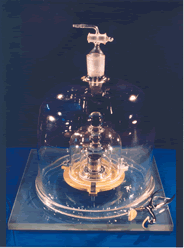
kgprototype2
Leave a comment
Δ
Post navigation
Published in
kgprototype2
Comment
UK Metric Association
Sign up
Log in
Copy shortlink
Report this content
Manage subscriptions

 UK Metric Association